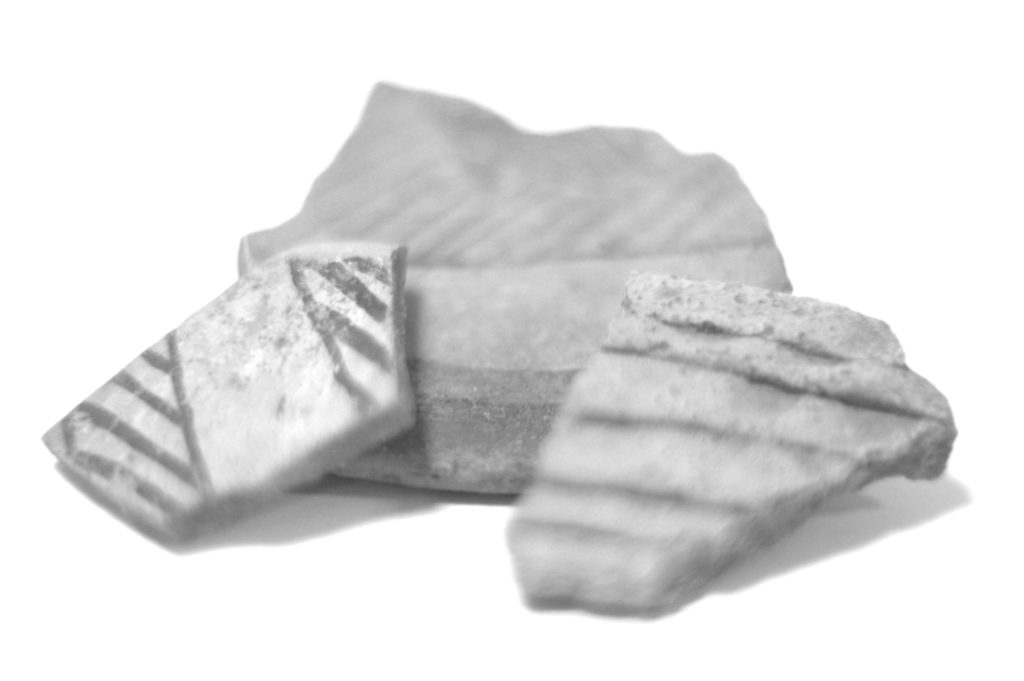

This book is dedicated to a nameless curator or interpreter in the British Museum who opened a cabinet for Mary Beard when she was a child so she could look a loaf of Egyptian bread that was on display in a cabinet too high for her to see. That experience was part of what launched her on her path to study the classics. In many ways, her book performs the same service for the rest of us: selecting a set of diverse topics from the classics to bring before us.
The main question that drives the book is, “Why should we study the classics?” For the author, interest in the classics was driven by “thauma” or wonder. She was simply amazed, delighted, and fascinated by the ancient world — and the incredible richness of what is available to be studied.
The subtitle, “the shock of the old,” is a nod to a 1980s book and television series, “the shock of the new.” When people encounter ancient works they often are unaware of how controversial the works were at the time. And many still have power to shock and provoke people today. They often deny simple analysis or expectations which, in part, explains their staying power.
The author reflects on how and why the classics have been taught. In Britain, learning Latin and Greek were required for post-secondary study and so a vast number of people studied them. She tries to knock down the fig leaves that have been offered for why they were required: they are not uniquely suited to exercising human faculties or understanding civilization. Interestingly, she mentioned a proposal that would have offered Sanskrit, in addition to or instead of, Latin or Greek. Having just read Proto, I’ve just been lamenting that I never studied Sanskrit. Of course, I never studied Latin or Greek either.
Privilege was a large driver of the use of classics. And the right-wing patriarchy still tries to use the classics to justify their positions. The author does a good job of stripping away this fig leaf as well. She also lays bare a number of ways in which the classics were taught, historically, to disadvantage people who lacked privilege. Boys and girls were taught Greek differently (with or without “accents”) that ended up penalizing girls in advanced study. Also, a number of the “tests” of Latin and Greek used passages that would be familiar in translation to people from a privileged background, rendering their need to understand the language nearly nil, which penalized people from other backgrounds.
In the end, she identifies two factors that make the study of classics particularly useful. First, they offer a level playing field for discussing current issues. Nobody can truly take sides in debates in the classics as they are so separated from us in place and time. But the issues that were relevant to those debates are still relevant today. This enables people to take positions without necessarily having to take sides. Second, they offer practice in difficult reading. To be honest, this rationale doesn’t particularly resonate with me: lots of things are difficult to read and understand.
As someone who has made always eclectic choices about what to learn, I don’t really need a case to be made for why to study the classics. Knowledge is an end in itself. It reminds me of my many students who, at the end of their university education, were so incredibly invested in the next step: “What if I make the wrong choice?” There is no wrong choice. Any step you make offers new perspectives and vistas from which to decide what to do after. Sure, some might be only, “Well, I sure don’t want to do this again!” But that too is useful. Experience is what you make of it.
My own perspective is that there is no such thing as a “well-rounded education” because there is too much to know for anyone to encompass it all. You always have to pick and choose. Furthermore, you can really only become an expert in one or two things — or perhaps a handful — over the course of a whole life. People just don’t live long enough for more than that. (Also, as one ages, it gets harder and harder to learn. Ask me how I know…)
Mary chose classics and it was a good and satisfying choice for her. It was a delight to read her book and get a sense of the thauma (or wonder) that brought her to the discipline and kept her it its thrall for a lifetime.