
a foo dog

I read Cory Doctorow’s newsletter Pluralistic regularly and this book was essentially an expanded version of a number of his columns. But I found several points insightful.

Recently I cited Cory when I wrote about not being able to speak centaur. He unpacks his “centaur/reverse centaur” model and provides an explanation of what “AI” really is and how we’ve gotten here. This is all stuff I’m already pretty familiar with.

I think his principal argument comes up after he talks about copyright. Basically, he points out that copyright is not going to protect individual artists for several reasons. First, the benefits of copyright have been almost entirely captured by the big publishers and media companies: they can wield it to extract profits from the public, but they pass a smaller and smaller fraction back to the creative workers that created the copyrighted works. And second, because the things that AI companies are doing (when they aren’t stealing works) would not be banned by copyright — or, if they were, it would make many other ordinary activities illegal.

His key insight is that creative workers need to recognize that they are “workers” and, like other workers, need to organize to have enough power to stand up against the big media companies. As a long-time union activist this is a story that is near-and-dear to my heart. I have frequently seen people who look for rules or laws to protect them (like minimum wage, for example) rather than organizing with their co-workers to demand the power to extract concessions from employers directly. He points out that the Taft Hartley Act, that cleverly and malevolently forbid sectoral bargaining, resulted in the high water mark for labor activism in the 1940s, and has allowed the oligarchs to slowly claw back most of what they lost to labor after the gilded age. I’ve been saying the same thing for a long time.

He also talks a bit about what happens after the bubble collapses. Philip Brewer has written a thoughtful essay about that and Cory’s perspective is largely aligned in terms of the big picture. But he goes on to point out all of the cool stuff that small, open-source models can do to make us all centaurs. He cites some examples he’s using himself and points out a bunch of other possibilities that small-scale AI could offer to enable creative workers to do their creative work better.

It’s a thoughtful and insightful book that pulls together a number of Cory’s ideas into a coherent and organized form. It’s worth reading.

My brother shared a post that used the word “eigentlich” (which in German just means “actually”). I said it looked like “elegant lich.” And then a few minutes later, we both said, “That would make a great name for a fantasy magazine!” So we decided to start one.

It also gave me an excuse to try blogsh.app. It’s a static site generation system that runs at the command line. You can do all your editing in markdown using vim and the system builds out static web pages. But it also can post announcements at either Mastodon or Bluesky and direct readers there to leave comments. It’s got a bunch other bells and whistles too.

As an aside, the blog.sh system was primarily designed as a way to gather together all of your old content spread across different services so that you can archive it all yourself in one place. It’s a really cool idea. I’m interested in doing that myself. But this seemed like a low-stakes way to try the system out.

I only ran into one really difficult problem while setting it up. I didn’t uncomment one line in a configuration file and it took me several hours to figure out what the problem was. Other than that, it was just figuring out how things are set up and where the things are. For someone without a strong background in unix, it would be a lot more difficult. But both my brother and I are old hands with unix, so it felt very comfortable exploring and using the system.

It’s been a busy couple of days as we set up the DNS, hosting, software, and social media accounts. I registered the domain name elegantlich.com and we put a placeholder there, where the magazine will actually go. Then we set up a blog at blog.elegantlich.com that we can use for testing and planning. We also created accounts at bluesky and mastodon.

We wrote a few posts. Phil wrote an introductory post and a post about what kinds of fiction we might look for. I wrote a post about creating the graphic identity for Elegant Lich. I was very pleased with the woodcut I found that seems like a good place to start.

Now we can actually start thinking about our project to make plans, timelines, and budgets. We could probably self-fund a very minimal publication, but I think we’re going to explore running a kickstarter. We attended a workshop on running kickstarters at the Nebula Conference and I think this might be a good fit. We’ve already identified a bunch of tiers that we could go for: dedicated web hosting, paper publication, and pro rates for authors.

Feel free to follow along as we conduct our planning in public. And, if you’re an author, start thinking about what kind of fiction you might want to submit to Elegant Lich. We’re having fun and we hope you will too.

a rock with an inclusion

I have signed the contract for my fluffy space-opera novelette Bearly Believable to appear at Hexfiled, probably in October. The story features two non-human biological androids that work at a picnic park on Planet Volpex.

Volpex is a terraformed world with a simplified ecology designed to maximize providing feedstock for the replicators that people use to manufacture everything. All of the people live on one developed continent and the rest of the world is left fallow to be harvested for feedstock — or used for recreational purposes.

I workshopped the characters using Wandering Shop Stories at Mastodon: A ranger who runs the park, an owl who patrols the park for litter, a bear that runs a fire-safety program, and a charming little girl named Brunhilde who is endlessly curious. I wrote a lot of short vignettes as I developed the characters. Some of the vignettes appear in the story, although most of the story is new and it includes new characters, like Lloyd — a penguin who works at Kowareta Nai, a business that sells surplus biological androids.

The story is set in the same universe as the Better Angels and includes some walk-on and cameo appearances of characters from there, including Totemo Isogashii and Lambda. In fact, I have several new Better Angels stories. When I wrote Bearly Believable, I was thinking it might appear in an anthology with the others, but that seems less and less likely to happen.

I submitted the story a few other place and several liked it, but said it didn’t quite fit. When I saw what Hexfiled was looking for, I realized it had found its perfect home:

Our editorial focus leans toward stories where the speculative element shapes the story’s infrastructure rather than decorating the top. We love biological SF, ecological futures, post-human consciousness, weird and slipstream fiction, military SF, and stories where the science is imagined thoughtfully even if it isn’t real. We are less interested in chosen-one narratives and portal fantasy.

We prefer stories that give the characters a selfhood. Not necessarily a fully realized identity if it clashes with the story’s concept, but a sense of interiority as much as the premise allows.

We appreciate stories that make us feel something alongside the imagined weird. We have a soft spot for fiction that is simultaneously absurd and grieving.

I look forward to sharing Bearly Believable with you when it appears!

a basket (possibly of deplorables)

This month, I have started to query for a literary agent to publish my next book. It is an odious process which is qualitatively worse than submitting manuscripts for publication. Most “markets” that you submit a manuscript to at least pretend that they will respond to let you know if they’re going to reject your manuscript. But agents — universally as far as I can tell — say that you can expect your query to vanish into a black hole, and that if you haven’t heard from them in two or three months, you should assume that you never will.

Don’t call us, we’ll call you. —All Literary Agents

Last fall, at WriteAngles, I attended a panel of agents that talked about their role in the publishing process. Agents are fundamentally a kind of parasite that act as gatekeepers for the publishing industry. Basically none of the traditional publishers accept unsolicited manuscripts, so you need an agent to even have your work considered. Agents see themselves as indispensable, of course. The agents on the panel suggested that you should query for at least six months before considering alternate routes to publication (i.e. small press or self publishing). Since I’ve already done those routes, I thought I would investigate finding an agent this time around. To find an agent, you need to engage in this activity called “querying”.

Querying requires a vast amount of research. I’ve attended several workshops to learn about the process. To begin, you need to draft a query letter, identify “comp titles,” and provide a preview of your manuscript. Of course, there’s no consensus about what any of these things represent, so you also have to study the submission guidelines for each agency. Some agencies also require other things (like a logline). Others put varying and unspecified arbitrary constraints (length of query letter, length of preview, etc).

One Straw Dog Writers Guild workshop I attended, provided a very nice overview of the query letter. A few takeaways: Address agent by name and be sure to not misgender. Indicate your reason for querying this agent: have you met before? Do you have something in common? Introduce your title. Identify the genre and wordcount. Craft a three paragraph pitch: The protagonist, the obstacle, and the stakes. Identify recent comp titles. Provide a short bio that focuses on your writing accomplishments. Finally, wrap up with a closing. Of course, as I said, some agencies want something different, so you still have to check the submission guidelines.

Perhaps the most difficult challenge for me was to identify “comp titles.” These are books with similar themes that have sold in the past few years. Before the workshop I had tried looking various places (e.g. Amazon and Goodreads) with little luck identifying good choices. But the workshop introduced me to NoveList a search engine that lets you search for recent books and find related titles. Luckily, my local library provides free access for library card holders. Using that, I was able to identify some recent books with similar themes.

Once I had the pieces mostly in hand, I started the most difficult part: trying to identify agents that my book might appeal to. There is a nagware website, querytracker, that many agents use for query submissions. The “free” version is intentionally crippled in a bunch of ways so that they can try to get you to pay for a higher tier. The website purports to have information about agents, but I’ve found that it has basically nothing and, what it has, is out of date. But it does have a bunch of agent listings so it’s not a bad place to start. Starting there, I investigate the literary agency’s website and study the page about the agent there to learn what kinds of things they are looking for. After exhausting querytracker, I will start studying Locus, which lists which agents sold speculative fiction books each month. That may well be more a profitable course of action, but querytracker — though not very useful — is easy and seems like a good place to start to practice, as I polish my letter and my pitch.

Lady Cecelia’s Journey is a sapphic, romantasy, road story. It is written as a series of six novelettes (that can serve as chapters in a collected edition) that, including a seventh “omake” story, totals 74,000 words. It is set in the same universe as my debut novel Revin’s Heart, but at an earlier point in time. That said, this is is a fully independent story.

Lady Cecelia is an aristocratic young woman attending the Westland Finishing School in a conservative part of the island of Belleriand. She has begun to realize she has feelings for women, but grew up in a sheltered environment with no opportunity to explore her sexual orientation. Her wealthy parents, who unbeknownst to her are the leaders of an organized crime syndicate, intend to place her in an arranged marriage to benefit the family politically.

Cecelia falls in love with Kasseh, a commoner who is attending the finishing school due to the patronage of the Baron. After they are are expelled for “conduct unbecoming a lady,” they flee together toward the capital, where — with the Baron’s support — they hope to be able to live together openly. Her mother takes a dim view of her rebellion against her authority and aggressively pursues her.

I’m aiming to send out at least one query per day. Recently someone at SFWA said they had submitted 150 queries before finding an agent. So that at least gives me some ball park figure to think about as I pursue this path. It’s a journey of my own that I’m undertaking one query at a time.

Oh. And if you’re an agent, I was kidding about the whole “parasite” thing. Really. Ha-ha-ha.

rock

On September 27, 2021, I submitted a new story, The Silver Tongue, for publication. And on September 28, I received a rejection. I submitted it several more times in 2021 and it got rejected as well.

My brother Philip was surprised. He said that if Gardner Dozois were still around, he would have accepted it instantly. Having never met Gardner, I couldn’t say. But it is kind of weird story and probably needed a weird editor to appreciate its merits.

I generally try to avoid editing manuscript after I’ve written them. I try to use whatever energy I have for writing new stuff. But at some point, I went back to look at it to see if there were obvious defects or changes I might make. I was kind of shocked to find that it really felt like a pretty tight story to me, without much additional cruft. It was good!

After a while, I gave up trying to keep it out to markets. A lot of the the top markets turn manuscripts around pretty fast and notify you when they reject stuff. Others take a long time and/or never get back to you. Every so often, I’d remember it and send it out. I submitted it twice in 2022, twice in 2023, twice in 2024, once in 2025. Then I saw The Freak!

“Huh,” I thought. “The Freak! They might like it.” And I sent it off.

It got accepted!

You can now read The Silver Tongue in Issue 4 of The Freak! Enjoy!

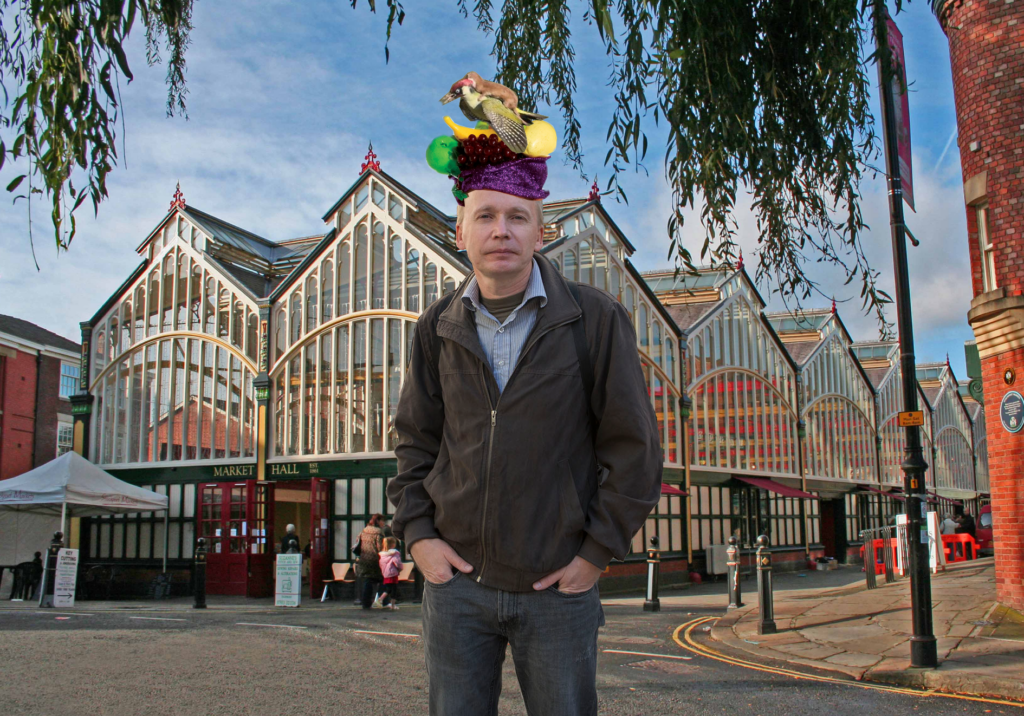
an image of Källë Kniivilä, Tutmonda Ĵurnalisto, photoshopped in front of some building — in England, if I recall correctly — wearing a Carmen Miranda hat with a weasel riding a woodpecker on top.

In 2007, when I was still engaged with the US Esperanto movement, I decided that what it needed was a tabloid newspaper to share fantastical stories about Esperanto personalities and events. I persuaded a couple of people to help (mostly Philip Brewer and Robert Read) and we produced a one-off newsletter — printed appropriately on tabloid paper — to hand out at the Landa Kongreso in Tijuana. We did it a few more times — in 2009 and 2013. I don’t know that it ever gave anyone more than a chuckle. But we had fun doing it.

I called it Oni Diras Nun! (or ODN for short.) This translates roughly as “one is saying now” but an onidiro is a rumor, so it has a tongue-in-cheek meaning more like “current rumors”. I hacked together a logo that shows the face of a prominent Esperanto journalist speaking into the ear of Zamenhof (the creator of Esperanto).

I hacked together a website for it. Eventually, however, the website quit working. Recently, I saw something that reminded me of it (an artist, Jason Chou is photoshopping Paddington Bear into everything imaginable. In ODN, I photoshopped a picture of a friend into a whole variety of unlikely places.) So I decided to take a few minutes to at least post a page that recovered the links to the PDFs of the issues — which never really left the Internet. So, for everyone (Anyone? Anyone?) who’s interested, here is OniDirasNun!

Highlights include:

  • The face of Zamenhof on toasted bread — but unfortunately the face of Felix Zamenhof, which limited its potential value.
  • The presidents of Esperanto associations who form a committee to consider the possibility of doing something.
  • A local Esperanto group success story from Champaign, Illinois.
  • An article about a memorial toilet seat where a local Esperanto group has met.
  • “Are Language Rats Human Rats?” (In Esperanto the words for “rats” and “rights” look similar).
  • The largest Esperanto library that you can never visit (the NSA’s archive of intercepted communications.)
  • Källë Kniivilä Worldwide Journalist (pictures showing an Esperanto journalist photoshopped into various fantastical locales).

We did have one more issue planned that was going to include La Ligo de Esperantaj Senmortuloj — an imaginary league of immortal Esperantists who had gone by various names over the century of Esperanto’s existence. But I got busy and my enthusiasm for Esperanto waned, so that issue never saw the light of day.

When I was in grad school, circa 1994, I started writing haiku in Esperanto and exchanged them with my brother Phil. It was a way to practice Esperanto and have “a moment of zen” each day during a time when I was very busy.

At first, most of my haiku were “joke haiku”. I eventually learned that there is a name for joke haiku: senryu. But some of the haiku I wrote, even in those early days, were actually not bad. And doing something creative, however small, was meaningful to me.

A few years later, after I had secured a faculty appointment and moved to the Pioneer Valley, the Haiku Society of America met in Northampton. I attended out of curiosity, and was intrigued when my haiku were taken seriously. I realized that I didn’t have to treat writing haiku as a joke. And that there was a long history of haiku, going back hundreds of years. And a larger world of practice that included tanka, renga, haibun, and more.

Ten years later, I decided to self-publish a book of haiku in Esperanto with English translation: Poŝtmarkoj el Esperantujo. I decided to include artwork along with the haiku and developed a theme of imaginary postage stamps from Esperantujo — Esperanto Land, a fabled country that springs into existence around people when they speak together in Esperanto. I used photographs I’d taken, combined them with a frame that looked like perforations, and added a monetary symbol that used the unicode glyph for spesmiloj, a proposed universal currency.

It was my first attempt to lay out a book. It was a lot of work and it didn’t turn out quite perfectly. But it was pretty good. It was incredibly gratifying to receive the proof in the mail and actually hold it in my hands.

Due to the full color illustrations, it was pretty expensive. But I had a great time showing it to people and giving copies to family and friends. Since it was so expensive, I set the price to be effectively at cost. As costs increased, Amazon became unwilling to sell it (since they don’t make enough profit). So I eventually decided to make it available via Google Books for free. I can still order author’s copies, however, so if anyone really wants printed and signed copy on paper, let me know.

I published three more books of haiku. Premitaj Floroj (Pressed Flowers) used images from the UMass Herbarium. My best work, I think, was senokulvitre (without eyeglasses) for which I created a series of black-and-white illustrations with a narrow range of focus. I still use these images frequently to illustrate blog posts. In 2016, I published the last one, Ideoj Ĝermas (Ideas Germinate) that used creative-commons licensed imagery of seeds from a French museum. These are all still available for purchase.

I’ve written hundreds of haiku in the intervening ten years, but I haven’t published another book. I came up with a great idea for one. But collecting the imagery would be a lot of work and so I haven’t done it. I’m not sure the world needs another book of haiku in Esperanto. I’m not sure it ever did, honestly. It certainly didn’t appreciate them. But I had fun making them and that’s what really counts in the end.

In May of 2022, I had an idea for a new story. I had basically just finished the last part of Revin’s Heart and was looking for something new to write. At the SFWA Writing Date I banged out a 1,900 word pilot and immediately knew that, what I had, was the first chapter of a novel. The semester was just ending, and so I had plenty of time to write. I worked assiduously and, in little more than a month, I had finished the rough draft of a 50,000 word novel.

A young man desperately wants a strong magical familiar but, instead, is captured and made the familiar of a powerful demon that intends to train him up for something. But what?

When I reached the end of what I had intended to write, I kept having fun ideas about what the characters could do afterwards. This happened about three times until I remembered that I was the author and I could just keep writing. I ended up writing two more chapters and another whole ending.

I revised and polished the manuscript over the summer. I got good comments from my faithful beta reviewers. My younger son, rolling his eyes, commented that he had been worried about his own writing being too weird until he read this manuscript. Sometimes the meaning of your life is only to serve as a warning to others. By fall, I was ready to start trying to submit it for publication.

I checked with Water Dragon first, but they were in the middle of publishing Revin’s Heart and Better Angels, so it didn’t work into their schedule.

I briefly considered trying to pitch it to an agent. But I decided it wasn’t really long enough and was weird enough that it would fit better at a small press. I saw one small press looking for “cozy fantasies” so I pitched it to them. I mean, I think of it as cozy fantasy. Unfortunately, they didn’t see it that way, objecting to “overt themes of sexual abuse and sexual coercion” — which seems harsh and exaggerated to me. But, they can publish what they want. I tried a few other publishers but had a hard time finding a home for the manuscript: it’s too cozy to be dark and too dark to be cozy.

I was gratified when I got Water Dragon to take another look at it this spring, since I thought it would be a good fit. And, this time, they agreed! I have now signed the contract and it will be worked into the schedule to come out this winter.

I really like this story and I think readers will like it too. I can’t wait to get it into your hands!

When Charlie Jane Anders wrote about short fiction it resonated with me because this is exactly what Water Dragon Publishing has been trying to do!

To be clear(er) Water Dragon Publishing has been developing a short fiction program for several years called “Dragon Gems”. Novelettes accepted for publication get their own individually designed cover and are published as both ebooks and printed books. Shorter fiction is now collected together in quarterly anthologies.

I submitted a novelette, The Third Time’s the Charm, to the Dragon Gems program which was accepted for publication. I then succeeded in persuading my (soft-hearted? soft-headed?) editor to open-endedly serialize subsequent novelettes as Revin’s Heart.

In the end, I wrote seven novelettes with the intention of collecting them together as a fix-up (along with several side-stories.) I did it partly because, like Charlie Jane, I really like episodic fiction. (Tho partly it was also because that’s where I was in my fiction writing at that point — I hadn’t written any longer fiction and I was nervous about taking on longer projects.) It’s worked out well for me as it’s given me a year where every three or four months I could go back and promote something. As a new author, it must be difficult to publish a debut novel and then say, “Well, I’ll be back in two years.”

Now, Water Dragon has asked me to write some new stories extending my Better Angels stories with the goal of eventually developing a collection. So far, I’ve written seven stories (maybe eight, depending on how you count). So I expect you’ll be seeing more of those this year.

I’ve now helped run the dealer table for Water Dragon at Worldcon, ComicCon, and Arisia (and, in a few weeks, Boskone ). It’s been interesting to see the reactions that readers have to the Dragon Gems. A number of people have said that, for whatever reason — pandemic, social media, dystopia, planetary collapse, take your pick — they are looking for shorter fiction and the Dragon Gems are just what they want. Similarly, many authors have stopped by and been giddy to see that Water Dragon accepts novelettes.

My brother Philip Brewer pointed out he wrote a relevant post 10 years ago about short fiction. I think this would be a great model to help raise the profile of short fiction too.

And neither of them are talking about Amazon’s Kindle Vella or Radish which are yet further takes on serialized fiction.

In any event, I was very pleased to see Charlie Jane’s post because it dovetails with my experience perfectly. There’s a lot of short fiction out there, but the market for it is broken. And there are too few mechanisms for people to discover it.

Below are my publications that were (or will be) released in 2022.

Brewer, S.D. 2022. The End of His Rope. Part Five of Revin’s Heart, Water Dragon Publishing, San Jose, California. 46pp.

Brewer, S.D. 2022. The Right Motivation in Corporate Catharsis: The Work From Home Edition, Water Dragon Publishing, San Jose, California. 226-233.

Brewer, S.D. 2022. Something Else to Do in Modern Magic. Knight Writing Press, Parker, Colorado. 55-59.

Brewer, S.D. 2022. Imaginary Friends in The Future’s So Bright, Water Dragon Publishing, San Jose, California. pages 290-297.

Brewer, S.D. 2022. Better Angels and the Very Scary Halloween. Truck Stop at the Center of the Galaxy Boos-Day, Water Dragon Publishing, San Jose, California. Available at: https://truckstop.waterdragonpublishing.com/truck-stop-boos-day/very-scary-halloween/

Brewer, S.D. 2022. Who’s Afraid of Whom. Truck Stop at the Center of the Galaxy Boos-Day, Water Dragon Publishing, San Jose, California. Available at: https://truckstop.waterdragonpublishing.com/truck-stop-boos-day/whos-afraid-of-whom/

Brewer, S.D. 2022. Crossing the Streams. Part Four of Revin’s Heart, Water Dragon Publishing, San Jose, California. 42pp.

Brewer, S.D. 2022. Better Angels. Truck Stop at the Center of the Galaxy, Water Dragon Publishing, San Jose, California. 25pp.

Brewer, S.D. 2022. Storm Clouds Gather. Part Three of Revin’s Heart, Water Dragon Publishing, San Jose, California. 36pp.

Brewer, S.D. 2022. For the Favor of a Lady. Part Two of Revin’s Heart, Water Dragon Publishing, San Jose, California. 42pp.