interior of old fort

I was interested in the Ken Burns’ series about the American Revolution, but I have a hard time making myself watch things on television, so I was pleased when I saw the companion volume in the library. As with The Raider, it reminded me of familiar events, but provided a lot of additional perspectives which give me a more nuanced understanding of the events. And, once again, I’m baring my soul a bit here to describe my own naivete because my education in history was so meagre.

I first learned about the American Revolution when I was in public school in southwest Michigan. None of the locations were places I had ever visited or known about, which made them hard to picture or bring into any kind of alignment with each other. But subsequently I moved to Massachusetts and visited many of the other locations — even if only driving through on the highway — which now gives me a lot more insight into their relative location and geography. Of course, I’ve also spent many months on a Caribbean island which — though not a direct player in the American Revolution, was fundamental to the forces that were driving the dynamic of the revolution.

The book has chapters to the major episodes of the American Revolution. The stage is set and then the familiar events are described, often by using short vignettes that highlight particular people — all kinds of people — so you see the war not from some top-down perspective, but through the eyes of individuals: Soldiers, to be sure, but also women, enslaved people, indigenous people, and immigrants. Certainly there is a bias toward the wealthy, as they were the most likely to have left behind a journal or record of their experiences. But there is a clear striving for diverse viewpoints that enriches the storytelling.

In between the chapters are a series of essays that offer supplementary analysis that provides different ways for thinking about the events. One by Stephen Conway, argues that Americans tend to think of the American Revolution as fundamentally about America, whereas to the British, it was but one element out of a complex set of imperial events — and was driven less by events in America itself than changes that Britain was making to integrate their colonial empire around the world.

One thing I had never really understood about slavery was the extent to which it was the foundation upon which almost all of the really large fortunes were made in that time. The super wealthy people that everyone talked about when I was young were the robber barons (e.g. Carnegie, Rockefeller, etc.) who had made their fortunes after slavery. But in the time of the American Revolution, the Caribbean islands produced the truly outsized fortunes for the nations that colonized them. The entire war involved people trying to thread the needle between pursuing “freedom” while keeping people enslaved. The book does a good job of telling that story from multiple perspectives.

The Revolutionary War was also a civil war that divided families and neighbors. This was an aspect of the war that was largely glossed over in my previous education.There were a lot of loyalists who aligned with the British forces and fought against independency. The book has an essay and follows the story of several people who tell the loyalist side of the story. In the long run, things did not turn out well for most of them.

Unlike his series about the Civil War, there were no photographs to draw from to help visualize the scenes. The book uses historical paintings, though most of them were made long after the war and were designed to represent a particular points of view rather than reflect any historical accuracy. Of course, as Werner Herzog has described about the Crimean War, even documentary photographs were often staged for effect.

The book also has historical maps showing the disposition of forces in the various battles. These I found to be more of a curiosity, rather than anything useful as a visual guide. They were often not in English or had the directions reversed, and there was no consistency to how the units were represented. I would have appreciated having interpretive maps of the battles drawn using a consistent style to show how the battles occurred. But maybe I’m just a weirdo.

Reading a heavy coffee-table book was inconvenient. But still recommended. A good read.

a house near fredricksburg

I have been looking for books to help improve my background in literature and was excited to find The Emerson Circle that talks about important early-American writers who surrounded Ralph Waldo Emerson. Although this book dwelt a bit longer on their personal histories and less on their writing, it was still a useful introduction.

A number of years ago, an Esperanto friend from Chile and his wife were visiting the Boston area. I drove in to spend a day with them and do a little sightseeing. I thought my friend, who is a bibliophile, might appreciate visiting Walden Pond and the Thoreau museum. I didn’t know much about it, but I had seen signs driving past Concord.

When we visited, we also drove to the Old North Bridge to see some of the Revolutionary War sights. I was surprised to see signs for Emerson’s house. And Louisa May Alcott’s house. I was completely unaware of the connections among these authors.

I did know a bit about Thoreau. My father had read his work and I had at least a passing familiarity with it. But I didn’t know anything about the museum. Or his life. Or the other people in Emerson’s circle. Some, like Nathanial Hawthorne, I was aware of (We read The Scarlet Letter in high school). Others, like Margaret Fuller, I was wholly ignorant of.

After my visit to the museum, I read some of Thoreau’s writing and wrote about it in my blog. I think that post still stands up pretty well, thirteen years later.

I was a bit disappointed with the first half of Nichols’ book. Partly, I think it assumed the reader would know more about the authors than I did. It also had a tendency to dwell on the minutiae of their lives: How many times this child was struck on the palm with a ferule. Which house they lived in this year or that. I found a lot of that pretty tedious.

I was looking for the ideas in their writing and how those ideas were passed back and forth. But the book seemed to expect that of course the reader would have read all their works beforehand. Since I had not, I needed to read between the lines quite a bit until I had picked up enough background knowledge to begin to fill in the gaps.

The second half of the book was closer to what I was looking for. There was more discussion of how the writers were responding to the important issues of the day: suffrage, abolition, the Civil War, etc. And it contrasted the types of writing that the different authors were publishing on the issues.

The book also got me to reflect on the various author’s communities I belong to. This fall, I’m hoping to spend more time reading the works nominated for the Nebula Awards which will help me gain a better understanding of the people in my community. Now that I’m retired, I finally have more time and energy to devote to reading. And I’ll also look for more books like The Emerson Circle to provide me with introductions to other important groups of historical authors.

pepper box

I rarely read biographies, but this book used the life of Evans Carlson to provide a vast amount of context to the story of China and the war in the Pacific. It truly expanded my perspective on a topic that I might have said I was already familiar with, but showed me how little I really knew.

The full title is The Raider: The untold story of a renegade marine and the birth of U.S. Special Forces in World War II. That’s quite a mouthful. It was written by a colleague at UMass Amherst.

When I was an elementary or middle school student, I got excited about World War II fighter planes. My father, whose kneejerk response to anything was to buy a book, bought me several books about fighter planes. One of them was The Flying Tigers. I spent a few minutes trying to figure out which book it might have been, but it turns out there have been a lot of books about the Flying Tigers and search engines are worthless now.

The Flying Tigers were a squadron of American pilots recruited to fly as volunteers in support of China prior to start of World War II. The vision it presented was a rather hagiographic portrayal of Claire Chenault and the pilots he taught to use the strengths of the P-40 to be able to beat the, lighter and more maneuverable, Japanese Zero. It was an exciting book for a young man and I’m sure I read it several times.

What it didn’t really talk about at all were the complexities of China or what the U.S. interests were. The Chinese, when they were mentioned at all, were described primarily as faceless hordes of people who were able to use manpower to replace mechanized work, repairing runways or building the Burma Road. Chiang Kai-shek and his wife featured prominently as elegant and graceful leaders. The ongoing civil war, the communist movement, and Western imperialism were all elided — or perhaps just minimized. As a boy, I was there for the exciting stuff.

The Flying Tigers don’t come up in this book at all. But I provide the above to explain some of the limitations of my understanding before reading it and how it dovetailed with what I already knew.

Evans Fordyce Carlson was the son of an itinerant pastor in New England. He ran away at a young age, tried working at various things, and eventually joined the Army. He served in World War I, primarily in an administrative capacity. He left the armed forces and was unhappy. He eventually decided to rejoin, but they wouldn’t restore him to the rank he had earned, so he decided to just start over in the Marine Corps. The theme of just going back and starting over recurs several times throughout his life.

In part, Carlson rejoined because he wanted to go to China. It’s not clear where the idea of going to China came from, but eventually he got his chance. He remade himself again in China, becoming an intelligence officer and began to educate himself about China and the competing forces that were trying to assert control.

The book does a great job of leading the reader through the various epiphanies he had as came to understand his own country’s role in creating and perpetuating the inequities in China. Carlson idealized Emerson and carried a book of his essays with him that he studied and underlined passages in. He believed in small-d “democracy” and the role of ordinary people in enacting it. As he came to know the leaders of communists, in particular Zhu De, he was persuaded that they were the ones most committed to democracy. He also found their approach to guerilla warfare could be transformative. It broke down the hierarchies among soldiers, emphasized educating individuals to understand the nature of the conflict they were in and why they were fighting. It also empowered them to be able to act on their own initiative in the absence of orders.

Back in the United States, Carlson had the opportunity to meet and form a personal connection with FDR. This ultimately led to him being given license to create a regiment of soldiers — “The Raiders” the book is named after — that were modeled on his approach to guerilla warfare. It was Carlson who coined the term “gung ho” which originally meant just “working together,” but later grew to have the popular meaning it has today. His soldiers distinguished themselves in several engagements in the Pacific island-hopping campaign. Eventually, however, the unconventional nature of the force became too much for the Marine Corps hierarchy to tolerate. He was sidelined and the force brought back into alignment with traditional Marine-Corps doctrine.

The end of the book deals with how thoroughly Carlson was whitewashed out of history. His association with the communists was used to discredit his ideas during the Red Scare. As the book says, nothing is named after him and there are no monuments to him, other than his tombstone at Arlington. In 2014, 70 years after the original Raiders were disbanded, the Marine Corps renamed their special forces unit The Raiders to establish an historical link between the current unit and the first.

This only scratches the surface of what’s here. There’s a lot more about the man, his personal life, and the other fascinating figures he came into contact with during his adventures. But, as I said initially, I don’t usually take much interest in biographies. The context of this one, however, made it well worth my time.

a foo dog

I read Cory Doctorow’s newsletter Pluralistic regularly and this book was essentially an expanded version of a number of his columns. But I found several points insightful.

Recently I cited Cory when I wrote about not being able to speak centaur. He unpacks his “centaur/reverse centaur” model and provides an explanation of what “AI” really is and how we’ve gotten here. This is all stuff I’m already pretty familiar with.

I think his principal argument comes up after he talks about copyright. Basically, he points out that copyright is not going to protect individual artists for several reasons. First, the benefits of copyright have been almost entirely captured by the big publishers and media companies: they can wield it to extract profits from the public, but they pass a smaller and smaller fraction back to the creative workers that created the copyrighted works. And second, because the things that AI companies are doing (when they aren’t stealing works) would not be banned by copyright — or, if they were, it would make many other ordinary activities illegal.

His key insight is that creative workers need to recognize that they are “workers” and, like other workers, need to organize to have enough power to stand up against the big media companies. As a long-time union activist this is a story that is near-and-dear to my heart. I have frequently seen people who look for rules or laws to protect them (like minimum wage, for example) rather than organizing with their co-workers to demand the power to extract concessions from employers directly. He points out that the Taft Hartley Act, that cleverly and malevolently forbid sectoral bargaining, resulted in the high water mark for labor activism in the 1940s, and has allowed the oligarchs to slowly claw back most of what they lost to labor after the gilded age. I’ve been saying the same thing for a long time.

He also talks a bit about what happens after the bubble collapses. Philip Brewer has written a thoughtful essay about that and Cory’s perspective is largely aligned in terms of the big picture. But he goes on to point out all of the cool stuff that small, open-source models can do to make us all centaurs. He cites some examples he’s using himself and points out a bunch of other possibilities that small-scale AI could offer to enable creative workers to do their creative work better.

It’s a thoughtful and insightful book that pulls together a number of Cory’s ideas into a coherent and organized form. It’s worth reading.

a bound journal with a book mark ribbon and elastic band.

When I was a graduate student, I read a book by Wittgenstein: Notes on Logic. It was just a series of brief notes, few of which I can now remember, that represented reflections that Wittgenstein had made on observations, insights, and contradictions related to logic. One was meaningful enough, I used it as my .sig for a while back in the 1990s: “If someone says, ‘I have a body,’ then one can ask, ‘who is speaking here with this mouth?'” This book has the same kind of feel, with many pithy observations, insights, and contradictions about writing fiction.

It’s not a book you can sit down and read straight through. At least, I could not. I would read a handful of notes (they’re numbered from 1 to 280) and then I would need to put the book down for a while.

I got my copy from the library. If I had owned a copy, I would have used a highlighter every few pages to keep track of the bits I agreed with or disagreed with. Or had no frame of reference to understand.

I don’t know whether I would have found the book useful as a beginning writer. And I’m not sure how useful I find it as an experienced writer. I’m not sure “useful” is quite the right word. It reminds me a bit of someone who said that the rules of Esperanto are all permissions. This book is largely about giving you permission to do it your way. She tells you how she does it, but makes it clear that she doesn’t think that’s the only way to do it. Or even the best way. It’s just what she does — your mileage may vary.

I never took a class in writing, in spite of teaching writing for 25 years. Indeed I never took a class in many of the things I became expert at. I never took a class for computer programming, or unix, or the web, or technology of any kind. Yet, I became a kind of computer guru. I never took a course in Esperanto, yet I became an award-winning author and poet. It isn’t as though I never took classes: I did a bachelor’s degree with two majors, a masters degree, and a doctorate. But I always was an autodidact even when taking classes: I looked at classes as an invitation to develop expertise in whatever I was studying. Sometimes the class helped, sometimes it didn’t.

I think this book helped.

As I was thinking about writing this review, I kept thinking of things I would want to argue about. Or agree with. Or highlight — if I’d had a highlighter, I might have done that. But I’m not sure that’s really the point.

278. It’s a long game. That’s all I ever want to impart to my students. What matters is that you learn to get work done in the way that is possible for you, through consistency or panic. Through self-recrimination or self-delusion or self-forgiveness: every life needs all three.

Just keep writing about the stuff that’s important to you, however you can make it work for you. It’s good advice.

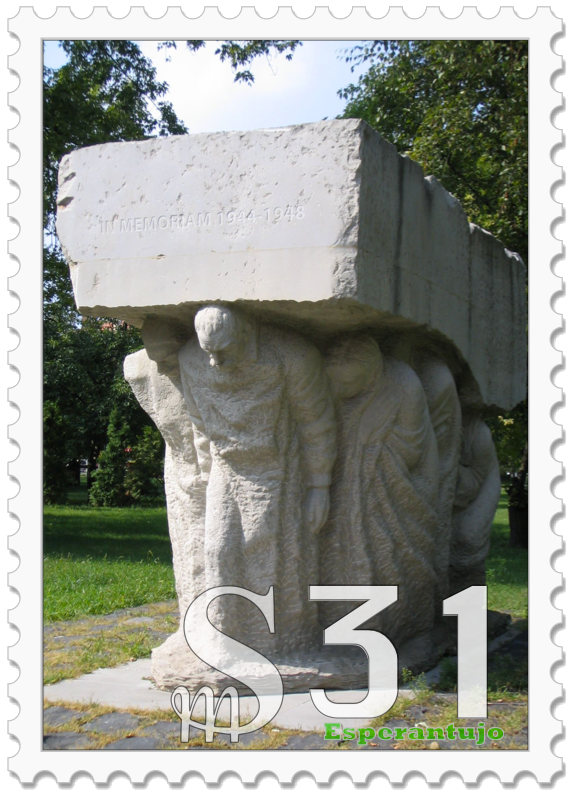
City Liberation Memorial in M.R. Štefánika Park

I’ve always been partial to non-fiction accounts of spies and espionage. I picked up Gorden Corera’s The Spy in the Archive and found it readable and informative, though with certain deficits.

Vasili Mitrokhin was a retired KGB colonel who spent most of his career as an archivist first in the Lubyanka and then, when KGB expanded to a new building, Yasenevo. He was the one tasked with moving the files — some 300,000 of them from one building to another. This gave him unique access to many of the KGB’s most closely guarded secrets.

The book dwells on Mitrokhin’s motives for defecting. Mitrokhin had become disaffected with the Soviet system, but was always guarded about his own history. The book provides what evidence is available and tries not to speculate overmuch. But the result is a bit unsatisfying since so little is really known.

What he specifically targeted was the “cheka” system of secret police using informers to maintain ideological compliance. Although the Russian intelligence service has changed its name from Tsarist then Bolshevik then Soviet then Russian times, it’s culturally the same. Now wielded by Vladimir Putin, although the individuals have changed, the practices have not.

Mitrokhin used his unique access to take notes about tens of thousands of files and to sneak them out hidden in his shoes. He spent years assembling the notes into a highly compressed form until he retired in 1984. He made approaches first to the Americans, who rejected him, and then turned to the British. Eventually the British brought him and his family in. The revelations contained in his notes shook the foundations of the intelligence community around the world.

Mitrokhin had seemingly been unhappy with his life and career. He was not much happier after his defection. He was frustrated with his efforts to publish and publicize his work. He passed away in 2004, still fighting to get his vision out.

The book, which intersperses the sketchy personal history of Mitrokhin with the events of his defection and some history of the origins of Soviet intelligence service and its practices during the Cold War, often felt a bit jumbled to me. But Mitrokhin is an interesting, if mysterious, historical figure and I enjoyed learning more.

a small wooden box

I saw a thin book at the library by Werner Hertzog, The Future of Truth, that caught my eye, and I spent a few hours today reading it. It’s not really a coherent book: it’s a series of reflections and anecdotes, often interesting and occasionally provocative, that are loosely about “truth,” as we move into the age of AI. I enjoyed reading it and found it time well spent.

It reminded me a bit of the first class in philosophy I ever took. (Note that Werner very specifically denies his is a book of philosophy). The professor of my undergraduate philosophy class asked us to write similar undirected essays, however. I really struggled with the class during the first half of the semester. I had no idea what to write. I was used to writing to achieve some purpose and with no direction I wasn’t sure what to write. I was definitely failing the class at that point. But then I discovered what to do: I could just write bullshit. I started writing a torrent of bullshit and turning it in. The professor was ecstatic. In the end, I think I got a C in the class. It probably was as useful as any class I took as an undergraduate, though I can’t point to any other really specific thing I learned in the class.

Actually, that’s not true. He also clued me into the importance of feelings. As a child of a scientist, I had a tendency to think of empirical science as the best source of truth about the world. My father, when he was teaching introductory biology would ask his students about to undertake the dissection of a cat to determine the sex of their specimen. When they asked how to do that, he put the questions back to them, “How should we decide? Should we vote? Why don’t you have everyone in your group vote.” Then he would direct them to dissect the cat and inspect whether it had testes or ovaries, as a lesson in empirically finding things out, rather than other means. But, of course, as a society we do use voting — for example, on juries — to determine truth. And feelings, as broad integrators of how we weigh up all of the evidence, end up being key.

When I was a doctoral student, I took another philosophy class. I was really ready for it then and immersed myself in the history of philosophy of science. It was taught by a young woman who had been a practicing, tenured biochemist. She decided to leave it all behind and went back and got another PhD in philosophy and was starting over to get tenure again. (Tragically, she passed away from breast cancer scant years later). Her office was at the other end of the hall from my office, so I would walk down frequently to chat with her. One day, I told her about my brother’s friend who liked to read the bible. He said it was important because it contained the true words of Jesus as well as a bunch of other nonsense. But that he could tell which were the things that Jesus actually said. She applauded my use of this rhetorical device. But I assured her that, no, this person actually existed.

The book is a bit uneven. One chapter is a single page about a pig that got stuck in drain. Another chapter is a single paragraph of two sentences. It meanders through history and personal experience, from opera to film, from America to Europe, from Rome to Potempkin Villages. From fraud to ChatGPT.

A lot is about people’s intentions and goals. He describes many instances of people using small lies to reveal a greater truth, which he distinguishes from people deceiving themselves or seeking to deceive others.

I had an undergraduate student once who couldn’t understand students not knowing what they wanted to do. He knew exactly what he wanted to do and had been striving toward it for his whole university career. I pointed out that it required a lot of courage to really pursue your dreams. Some students might know what they wanted to do, but be too afraid to actually try because, if they failed, they would have lost their dream. If they never really tried, they could go through their life telling themselves they really could have been an astronaut or whatever, if they’d really tried. He thought that was the stupidest thing he’d ever heard. In the end, rather than doing the thing he’d always wanted to do, he found a completely different kind of profession and seemed very happy.

Toward the end, Werner looks at the implications of generative AI and deepfakes on our growing inability to distinguish truth from falsehood. He tries to balance the amazing things that AI can do in specialized domains with it’s undermining our ability to distinguish fact from fiction.

In the end, his main conclusion is that truth ultimately isn’t something that can be apprehended by people. But the striving for it is essential. He advocates spending more time walking on foot, out in the world. And reading books — like his no doubt. No lie there.

coins

I recently read The CIA Book Club: The secret mission to win the cold war with forbidden literature by Charlie English. It describes a covert program to fund underground publishers and cladestine efforts to provide access to information from the West to people behind the Iron Curtain. But is primarily focused on Poland.

I had become aware of the CIA covert support for sending books behind the Iron Curtain years ago. A number of Esperanto books were published and shipped to Eastern Europe with money from the CIA. I picked up this book to learn more about the program, but I was a little disappointed when it turned out that the book is almost entirely about the effort in Poland in the 1980s.

The events in Poland, from the coup in 1981 until the collapse of the communist regime in 1989, were at least minimally known to me. I graduated from high school in 1981 and I remember seeing reports on the television news about Poland. At that time, however — as a callow youth — I was not particularly paying attention to international or political events.

The book focuses on the events principally following Mirosław Chojecki, an independent publisher. He had been publishing an anti-government newsletter and was imprisoned shortly after the coup. After engaging in a hunger strike, he was released and subsequently went into exile in the West. In the United States, he became aware of the CIA efforts, met a number of important political figures, and was brought into contact with the agent who was running the largest part of the operation with respect to Poland.

The contributions of many of the other members of the underground publishing movement are also recognized: Helena Łucywos and the other women who published Wazovia Weekly, Jerzy Giedroyc — who ran the CIA front in Paris — and many many others. The book ends with the fall of the Berlin Wall and the dismantling of the CIA book operation. But it never really talks about any of the other parts of the operation, since it’s really just about Poland.

It was an interesting read for me. Since I was only vaguely aware of these important events, it was nice to have a primer that provided a lot of the back story. But I would still like to know more about the CIA book program in general — and not just the parts related to Poland.

fossil sharks teeth

Palace of Deception by Darrin Lunde describes the lives of three men, Henry Fairfield Osborn, Roy Chapman Andrews, and William Akeley, who were instrumental in the creation of the American Museum of Natural History (AMNH). The book seeks to marry and intertwine what are really four separate stories into a coherent narrative. Each of the stories was interesting: but I felt the whole didn’t quite do justice to any of the stories.

I’ve always been a fan of Roy Chapman Andrews. I first learned of him as a graduate student when I attending a workshop at Beloit College. Chapman grew up in Beloit, graduated from Beloit College, and became an adventurer who was, in many ways, the inspiration for Indiana Jones. When I saw this book that aimed to describe his amazing stories of adventure, I was hooked.

The AMNH was actually founded by Albert Bickmore, who had trained with Louis Agassiz, with money raised from wealthy New York robber barons. But it was under Osborn that the AMNH grew and took shape as an institution.

Osborn was a follower of Francis Galton, the cousin of Charles Darwin. Galton was a statistician who extended the thinking of Darwin to create eugenics and social Darwinism. Osborn — not unlike racists today — became convinced that immigrants were endangering the “superior” race, and he began to use the museum to propagandize this theory. He was also suspicious of laboratory science, and preferred the term “naturalist” for people who were studying the natural world. He hired both Roy Chapman Andrews and William Akeley as part of his plan to develop the museum.

Roy Chapman Andrews, unlike Indiana Jones, was primarily a field biologist. He wanted to document and collect specimens of animals in regions of the world that had not yet been studied by Western science. He was successful at raising money for long expeditions to Asia (Japan, Korea, China, and Mongolia) that collected animals, and later fossils, to bring back to the AMNH. His exploits were extraordinary and the book touches on a number of them.

William Akeley was a taxidermist. He developed a number of innovative techniques to create elaborate dioramas that showed animals in their natural setting and also went on long expeditions, principally to Africa, to collect big game (elephants, lions, and gorillas). Many people believed that Africa would be settled by white people, much as North America had been, and that all of the large animals would be driven to extinction.

Each of the four stories, about the museum and these three men, is interesting in itself. There is a lot of fascinating detail, and the book does a good job of showing the complexity of the history around the subject. The book is also timely, given the current fascist push toward expelling immigrants and promulgating a racist “great replacement” theory.

At the same time, the whole doesn’t quite hang together as a coherent story. The individual stories have the feeling of being incomplete as each has been subordinated to the overarching narrative. It’s still a good read, however.

Money

The History of Money by David McWilliams (2024) is subtitled “A story of humanity.” It skims over a vast landscape, dipping in now and again for a deeper dive into moments when innovations in how societies created and managed money (or failed to do so) contributed to world-changing events. The complexity of our current world economy has grown up guided and constrained by the cautionary lessons of history, but ever spurred on by people’s greed and prurient interests. This book provides an enjoyable and useful introduction with a lot of fascinating details along the way.

He begins with the earliest known examples of commercial tallies, records of values, and transactions, going back to the stone age. The theme of money shifting between measures of commodities (e.g. grain or precious metals) or value (as anchored by fiat and monetary policy) plays out over and over throughout the book.

Many important historical figures are introduced with the roles they played in advancing innovations in monetary practice and policy. I’ve always lamented that, as someone in the sciences, I had little flexibility to study history and classic literature. McWilliams has prompted me to consider reading at least two important books out of history: Xenophon’s Oeconomicus, the foundational text of economics and Liber Abaci by Fibonacci.

The books ends with a pretty harsh dismissal of cryptocurrencies:

Over the years we have seen that money is a technology designed to solve a problem. I’m scratching my head as to what problem Bitcoin in particular and crypto in general actually solve. Despite the small foothold Bitcoin has gained in the mainstream US investment market, crypto looks set to remain on the fringes, a source of obsession for its supporters and aficionados, but not very useful or practical in reality. Bitcoin is to money what Esperanto is to language.

Other than the slur against Esperanto, I am in complete agreement. I mean, he’s not actually wrong about Esperanto either, but I would have preferred he slander Volapük rather than Esperanto to make his point.

If you’re curious about understanding how money works in practice and how it came to be the way it is, this book is a great place to start.