
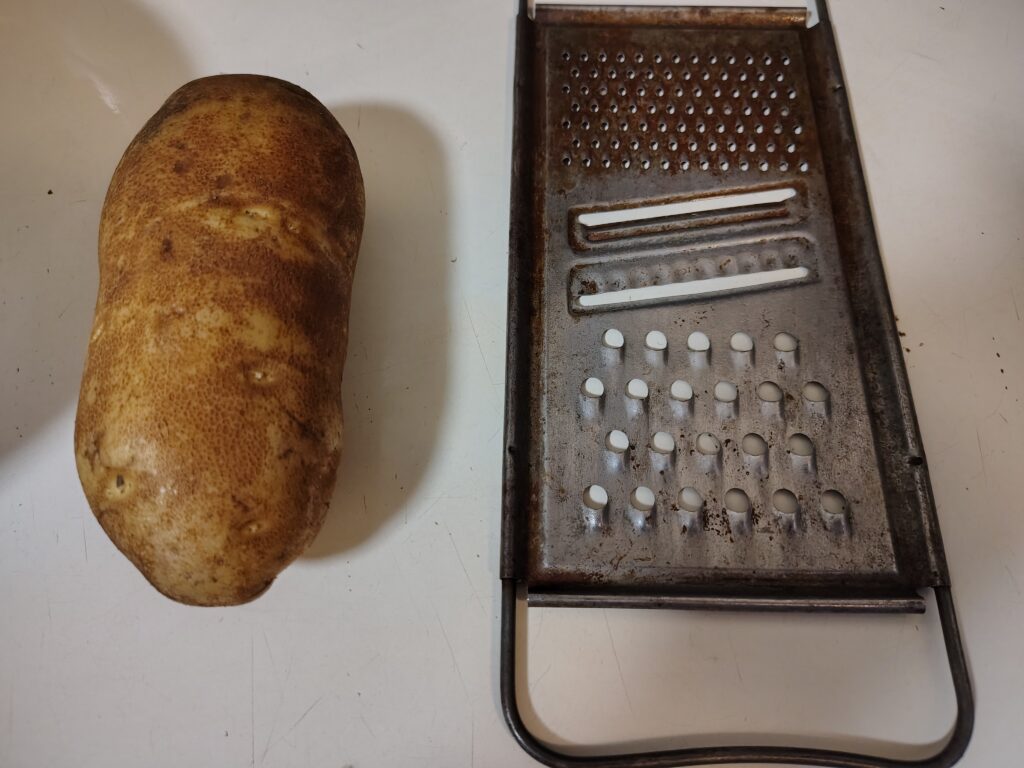
I’ve always loved hash browns. It’s perhaps my favorite way to eat potatoes. I don’t really like mashed potatoes (though they’re edible with enough gravy). And, as far as I’m concerned, you can discard the potato part of a baked potato because I really only like the skin. But hash-browned potatoes are special.
I tried making them a few times years ago and failed pretty utterly. Then I discovered a boxed brand of dehydrated potatoes that worked OK. They weren’t great, but it was better than nothing. Then the grocery store quit carrying that brand. So I broke down and actually looked at some recipes for hash browns. Using those, with several rounds of experimentation, I’ve developed a set of heuristics that works pretty well for making hash browns the way I like them.
I’ve tried several varieties of potatoes and found that russets seem to be the best for hash browns. The others have a tendency to become mushy. Nobody likes mushy hash browns.
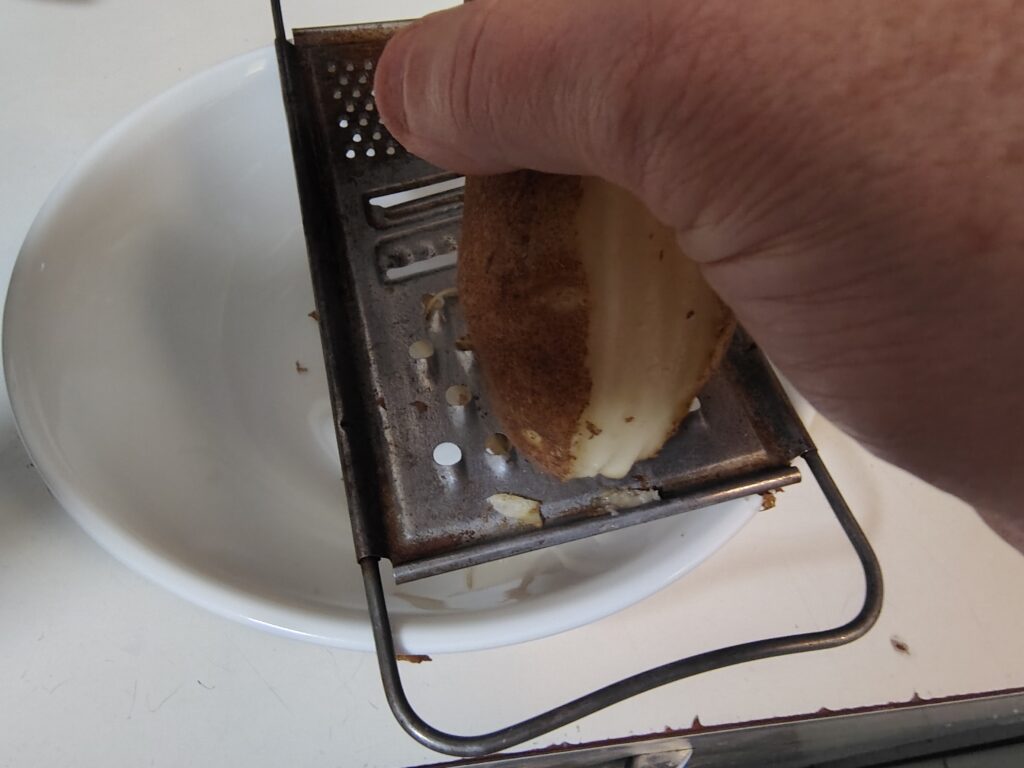
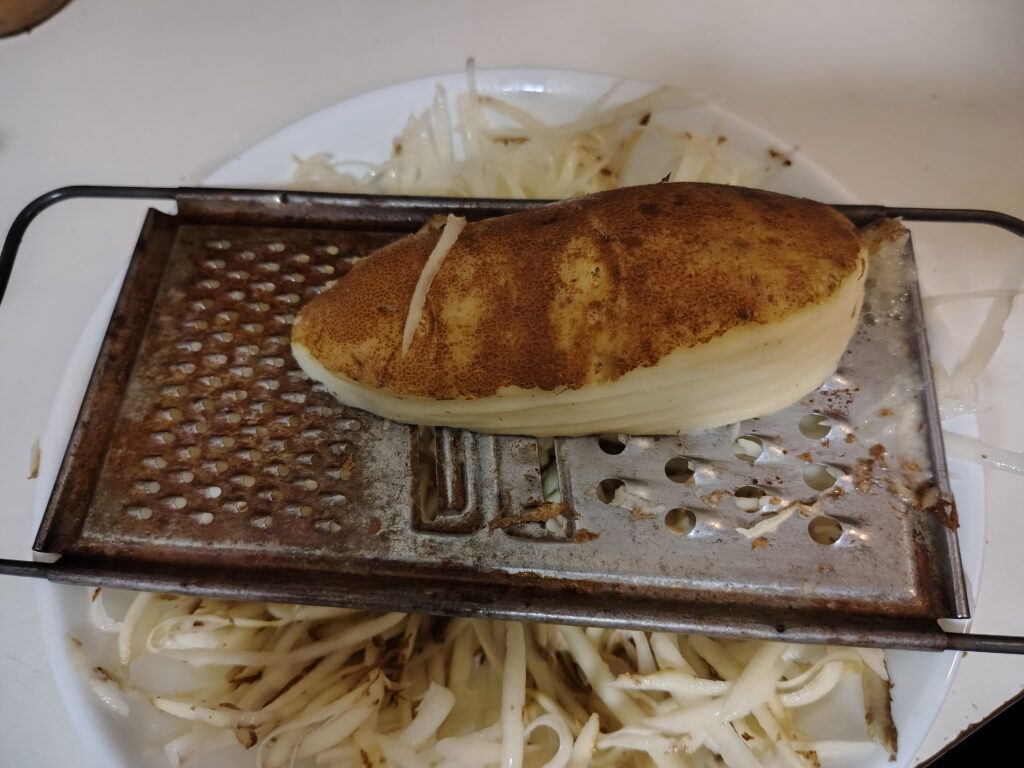
I have this ancient grater that works, but requires a few tricks. I start by grating all around the potato, to make a band around the potato. Then I rotate the potato and grate along the longest edge, periodically switching which direction I’m grating to grate the potato evenly. This gives nice long strips of potato. Eventually, I turn the potato on its end and grate it down to a tiny bit of skin.
Note that I include the skin in my hash browns. Some weirdos might like to peel the potato before grating it, but for me the skin is the best part.
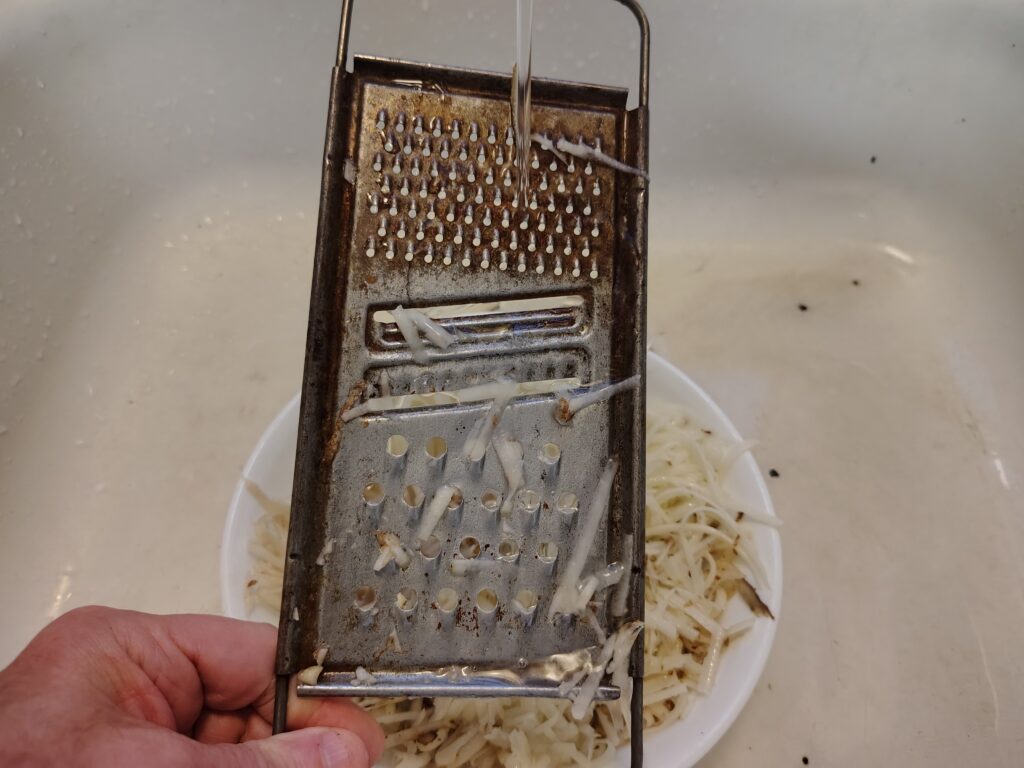
Once the potato is grated, I fill the bowl with water (which is a convenient way to rise the rinse the grater. Then I add a fair amount of salt to the water. I probably should measure how much salt I use sometime. I’m not sure it really matters all that much. Most of the salt is lost when you drain the potatoes. But I think increasing the osmolarity of the water causes the potatoes to lose water, which makes them taste better.
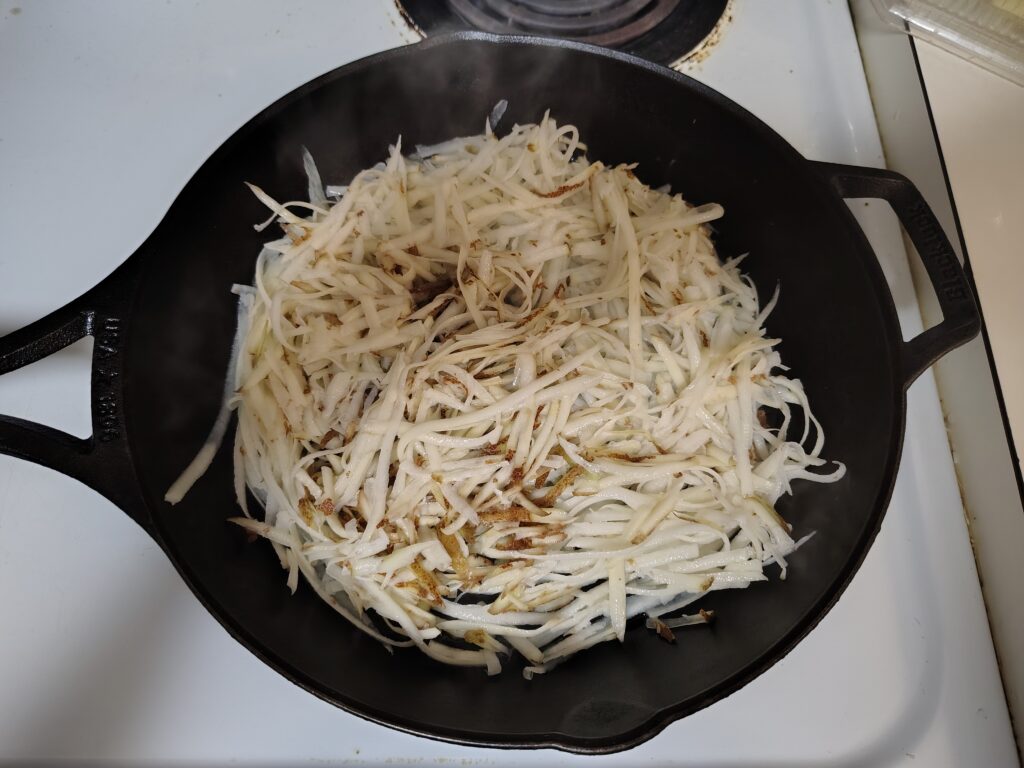
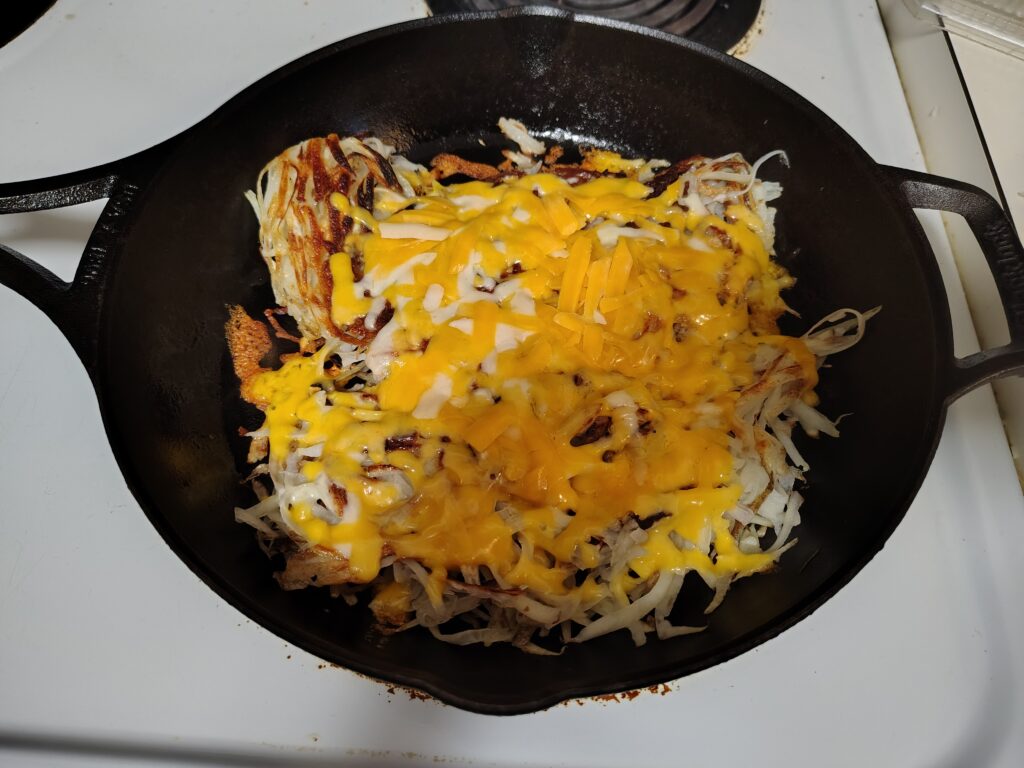
Once the potatoes are soaking, I pour a bit of canola oil into the cast iron skillet and start heating it up. I use medium heat (6/10 on my dial). As the skillet heats up, I drain the potatoes into a colander. Once the oil is hot, I spread the potatoes out in the skillet.
I let them cook until they’re brown on one side (5-10 minutes) then flip them over, usually in two portions. Rather than timing, I tend to cook them until I see and smell that they’re browning. Probably actually timing things would be better, but I’m not that kind of cook.
I usually like to melt some cheese on my hash browns. I sometimes joke that this is how I make my vegan hash browns non-vegan. There are other ways you could make them non vegan: e.g. use butter or bacon grease instead of canola oil. Or make breakfast stew.
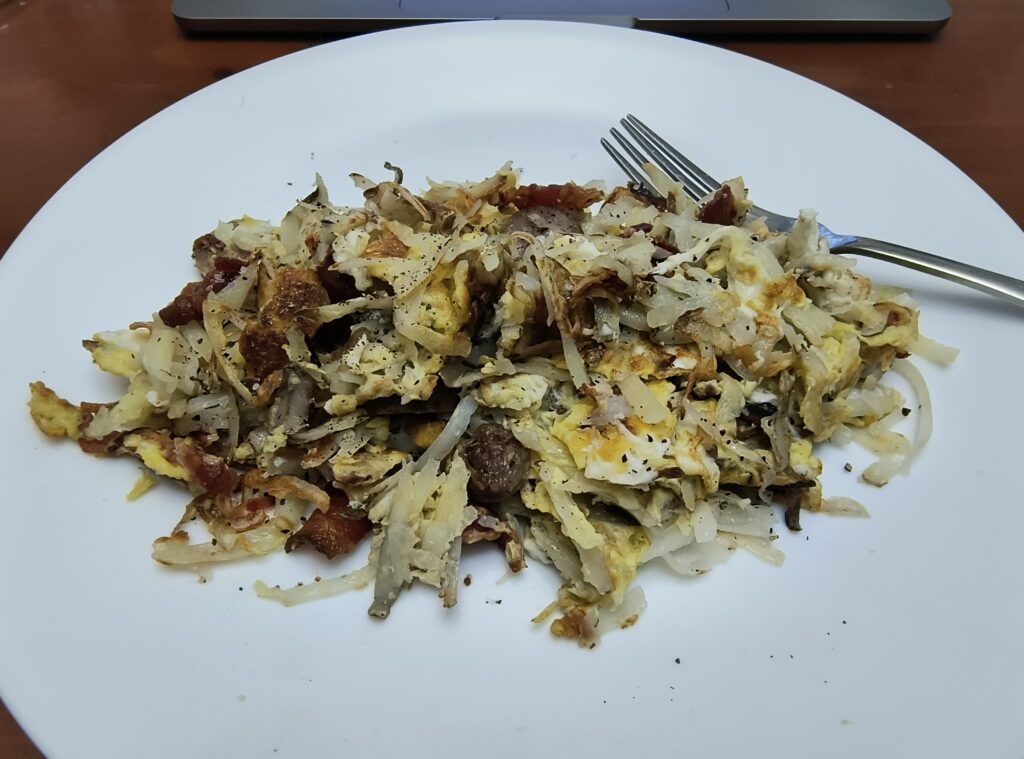
A restaurant in Southwest Michigan I used to frequent in graduate school made a dish called “Maggie’s Breakfast Stew” which is easy to make at this point. Rather than adding cheese, just throw in some diced sausage, bacon bits, and two eggs, then scramble. I think they also added onions and green peppers, but I think it makes the dish a little wet. You can add cheese at the end too. Or not. It’s not going to be vegan either way.
I used to call it “Maggot’s Breakfast Spew” because it’s not a very pretty dish. I imagined they kept these giant caterpillars in the kitchen that would eat the ingredients and then they would squeeze them out into the pan to cook the dish. I have a very vivid imagination.
Maggie’s is also where I learned to make a so-called Mexican omelet, but that’s a recipe for another day.
Anyway, that’s how I make hash browns. Enjoy!
I cheat and use pre-shredded potatoes that I found in the frozen section from Ore-Ida, or the mashed potatoes section (I don’t know the brand) of the grocery store. I suspect the one from the mashed potatoes section is more wet and would need salted water.
I think the pre-shredded potatoes don’t have the skin. I would probably be happier if I could get pre-shredded potato skins.
Similarly, I’ve wondered if I could get Spanish peanuts without the peanuts — just the skins. Mmmm.